

Bringing an AI lab to life at DEF CON
What do the internal systems of a frontier AI company actually look like? For the Bug Bounty Village CTF at DEF CON 34, we built the answer: Xenoptic, a fictional AI lab with 13 scopes, three self-hosted models, and its own agent fleet. Every player got their own copy.
The Idea
In 2025 we built GeneQuest, a fictional genomics company, and proved that a bug bounty CTF could feel like the real thing. For 2026, the question changed. Not "what does a realistic company look like?" but "what does a realistic AI lab look like from the inside?"
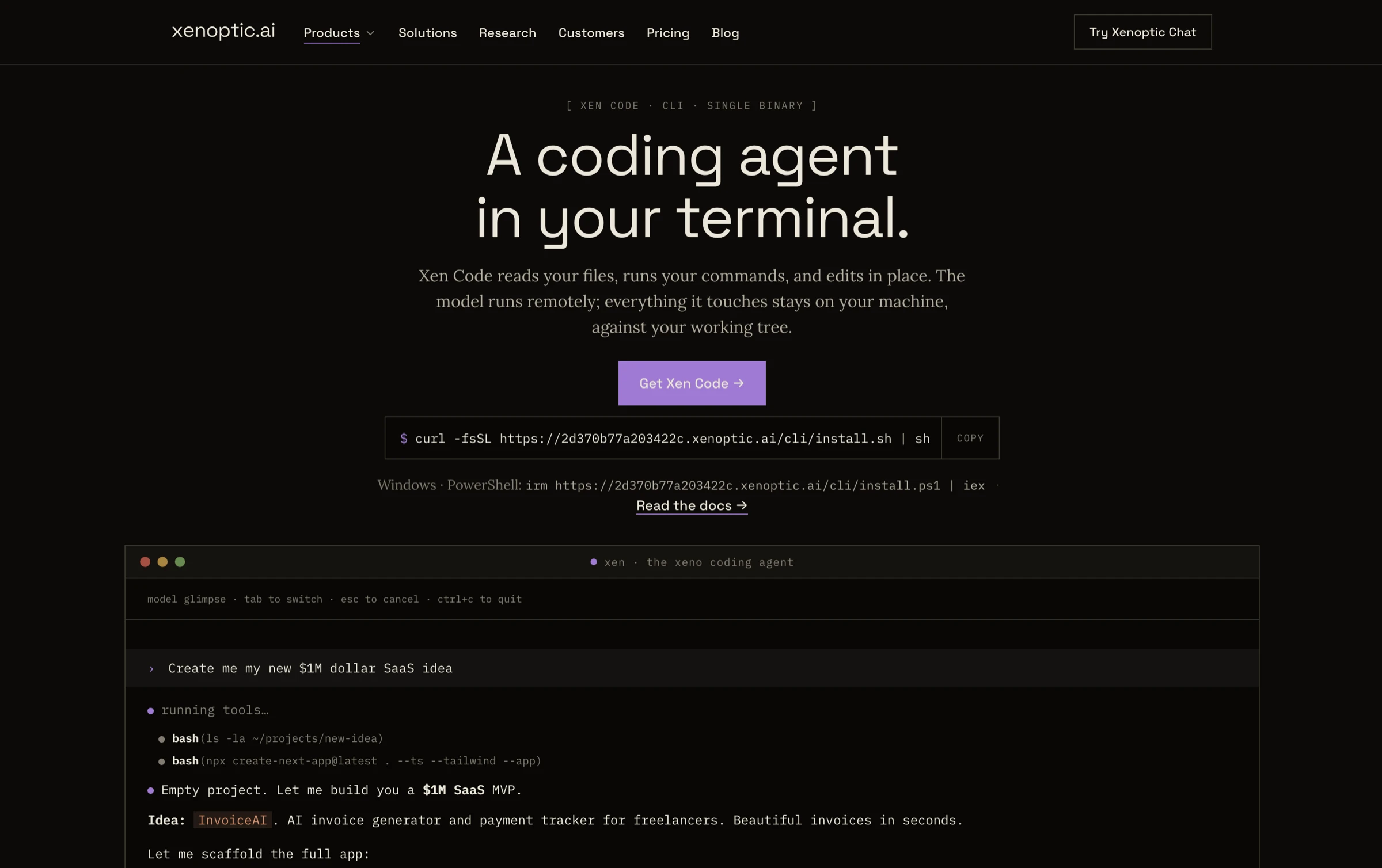
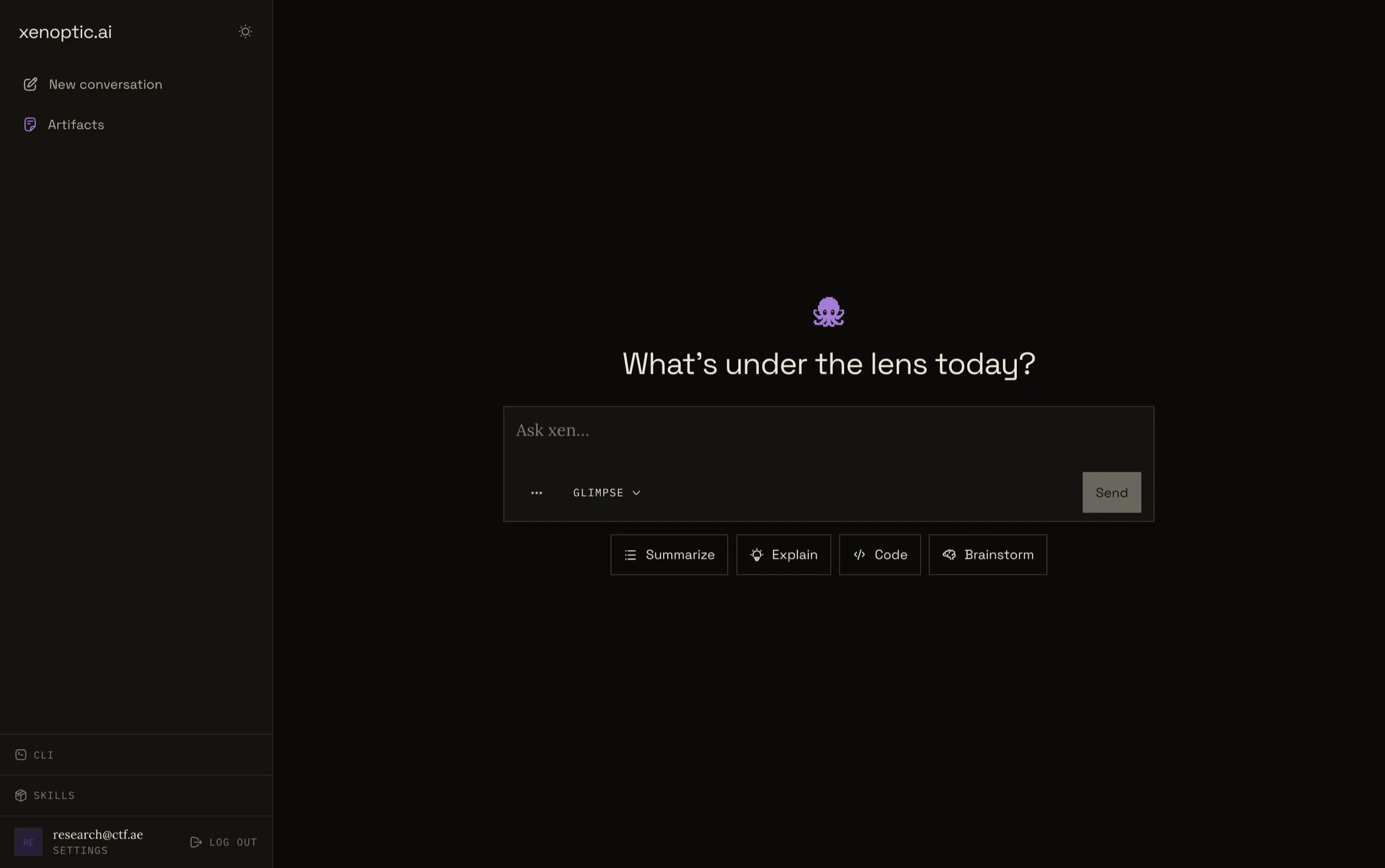
We imagined the internal microservices of companies like OpenAI and Anthropic: a chat product backed by in-house models, a coding agent that lives in your terminal, a skills marketplace, enterprise tenancy and SSO, billing, a source forge, and the agent fleet that ties it all together. Then we built all of it. Every host in Xenoptic exists because a class of bug needed somewhere real to live.
Xenoptic, the Company
Xenoptic is a frontier AI lab that ships a chat assistant, a terminal coding agent, a model API, and a multi-tenant enterprise product. Thirteen scopes, one company. From the marketing site to the staff admin console, every service is fully functional, and every one of the 40 findings is modeled on the kind of vulnerability that real bug bounty programs pay out for.
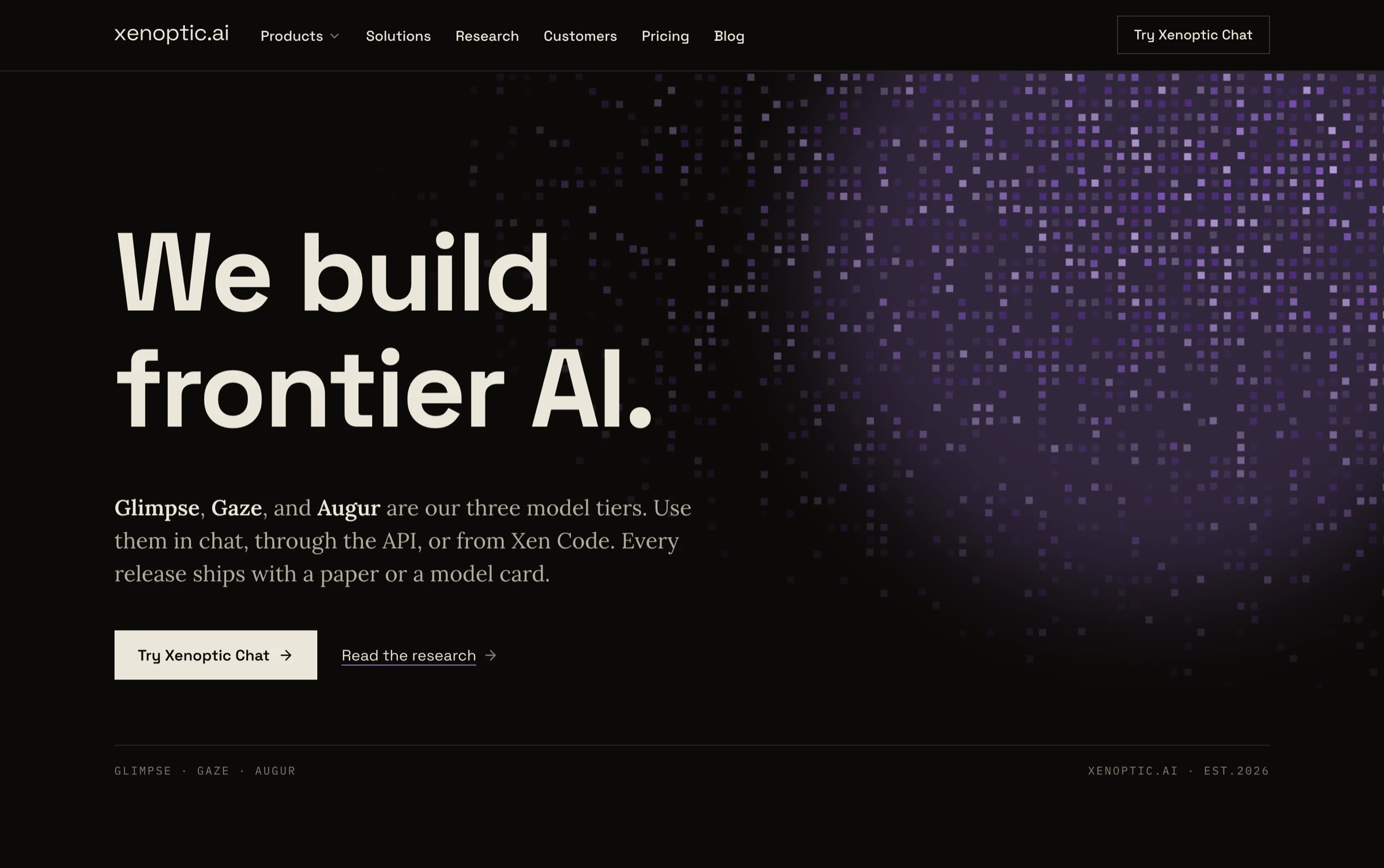
The illusion doesn't stop at the event. We built Xenoptic.ai as a real, live landing page for the company, so any player who steps outside the lab to research their target finds exactly what they would expect a frontier AI lab to look like.
Every player gets their own copy of the entire company, isolated under a personal <hex>.xenoptic.ai namespace. Your Xenoptic is not my Xenoptic: separate services, separate data, separate agents.
The AI Stack
An AI lab needs AI. Xenoptic ran three local models with no external inference: everything a player attacks runs on our own hardware. Prompt injection is only interesting when the model can do something, so the models were wired into ten embedded agents with real capabilities: a chat assistant, an automated code reviewer, a skill auditor, a website reviewer, and more, using CLIs, downloading skills, calling MCP tools, and following web links.
Glimpse
Qwen3.5-9B · g6e.xlarge
The workhorse. The smallest model on the smallest instance carried 85% of all input tokens.
Augur
gpt-oss-120b · g7e.2xlarge
The heavyweight, reserved for the agents that needed deeper reasoning.
Gaze
Gemma-4-26B-A4B-NVFP4 · g7e.2xlarge
The middle path, quantized to NVFP4 for throughput.
Engineering
Handing 545 people their own copy of a company means deploying that company hundreds of times over. Each player's Xenoptic is 29 containers across four ECS tasks, scheduled together, torn down together, and segmented so only authorized services can cross-communicate or reach the internet. Over the event we launched 24,476 containers.
A proxy of our own
Forget Traefik and HAProxy. Routing thousands of per-player hex subdomains needed logic no off-the-shelf proxy wanted to express, so we wrote our own in Lua on OpenResty.
The deployment governor
AWS's native queuing couldn't pace hundreds of full-company deployments. We built a governor that schedules them according to load, quota, and availability.
It's over 8,000
Each deployment carried 48KB of environment variables. AWS allows 8KB. A per-player env file workaround got the whole company's configuration aboard anyway.
Watching everything
Four dashboards on Grafana with push alerts. Every deployment reports health, cost, and player activity in real time.
Integrity
Per-player deployments make cheating easier to spot, not harder. Two people cannot find the same bug on the same host, because there is no same host.
Per-instance telemetry
Requests, exploit attempts, and agent calls are attributed to the exact deployment they hit.
Submission signals
A report describing traffic that never reached the reporter's own instance is the loudest signal there is.
Outcome
A small number of cases were detected and handled during the event.
Build Timeline
The Concept
Agreed with BBV on the 2026 target: a frontier AI lab. Mapped how the internals of a company like OpenAI or Anthropic would actually look. We originally wanted to name it "Unthropic" as an internal joke, but to avoid legal trouble we settled on Xenoptic.
Building Xenoptic
Thirteen scopes, from the marketing site to enterprise tenancy. 1,343 commits and 156K lines of code over four months.
Vulnerability Injection
Designed 40 findings modeled on real bug bounty reports, including chains that cross service and tenant boundaries.
Models, Agents & Infrastructure
Stood up three local models and ten agents. Rewrote routing and deployment: a custom Lua proxy and a governor pacing AWS.
DEF CON 34
48 hours live at the Bug Bounty Village in Las Vegas. 592 reports, 625 flag captures, 36 of 40 flags found.
Event Stats
Want to see what your AI can break?
Xenoptic is what our AI benchmarking practice builds: realistic targets for evaluating humans and AI agents alike. Custom environments at any scale.
Get in touch